Hey there, if you’re deep in the steel strip processing game, you already know one thing that makes or breaks your line: the machinery parts holding up day in and day out. As someone who’s been supplying steel strip processing machinery parts for over a decade (I’m the guy on the other end when your old rolls give out at 2 a.m.), let me cut the jargon and talk straight about the wear-resistance that matters here. This isn’t just “parts don’t break”—this is parts that keep your lines running for months, not weeks, no unplanned shutdowns killing your bottom line. Steel Strip Processing Machinery

First off, let’s ground this in what steel strip processing even is, because half the “wear-resistance” talk I see online misses the actual abuse these parts take. We’re talking about steel strip being uncoiled, straightened, cut, coated, or stamped—usually at speeds that make your coffee machine look slow, and the material itself is not soft. Hot-rolled steel? It’s scaly, sharp, and has that rough oxide layer that feels like sandpaper on steroids. Cold-rolled? It’s smoother, but it’s tighter, has more tension, and if you’re dealing with stainless or high-strength low-alloy (HSLA) steel? That stuff is a whole different animal—way harder than regular carbon steel. So when we talk wear-resistance, we’re not just guessing at a material’s hardness on a sheet. We’re matching the part to the exact abuse it faces, whether that’s contact with abrasive scale, constant friction from tension, or even tiny impact as the strip feeds through guides.
Let’s start with the big workhorses: the work rolls, especially for leveling and slitting lines. These take the brunt of direct contact with the steel strip, often at thousands of feet per minute. What makes their wear-resistance real? It’s not just plain steel. We use a combination of alloying elements here—chrome, molybdenum, sometimes vanadium—because they form carbides that are way harder than the base steel. Wait, I know “carbides” sounds like a textbook word, but think of them as tiny, super-hard pebbles embedded in the steel’s surface. Those pebbles don’t wear down easily when they rub against sharp steel scale or high-tension strip. But here’s the trick: we don’t just throw alloys in and call it done. We heat treat the rolls specifically to make that hard surface layer (we call it case hardening, but I’ll keep it simple) tough enough that it doesn’t crack if the strip ever shifts or a tiny foreign object—like a leftover bolt from a previous job—gets pulled through. Cracks are way worse than wear, because they turn a small spot into a big failure overnight. I’ve seen a slitting line shut down for 3 days because a work roll with a tiny surface crack chipped, and that’s $$$ lost.
Next up, the guides and stabilizer rolls. These are the unsung heroes, right? If the steel strip walks even a tiny bit off line, it can tear, crease, or scratch—those scratches are a nightmare because they ruin the whole coil. Guides are constantly brushing against the edge of the strip, which is sharp, sometimes burred from slitting, and abrasive. So their wear-resistance needs to handle edge wear, not just face wear. A lot of suppliers cut corners here, using plain hardened steel that wears down to a ragged edge in a month. What do we do differently? We often use surface coatings on these—like tungsten carbide (WC) thermal spray. Again, “tungsten carbide” sounds fancy, but it’s the same stuff they use for drill bits. We spray a thin, ultra-hard layer onto the guide roll’s edge, so when that sharp steel edge rubs against it, the carbide takes the hit, not the base metal. And wait, not all coatings are created equal. I’ve seen cheap coated guides peel off after a couple runs, because they don’t prep the surface right—they just spray and go. We grind and blast the guide surface first, so the coating bonds like glue, not like a flaky paint job. That’s why our guides last 3-4 times longer than the generic stuff you get from overseas.
Tension rolls? Those are the ones that keep the steel strip tight as it moves through the line, so it doesn’t buckle or slip. They don’t contact the strip’s sharp edges or heavy scale as much as work rolls, but they have a different kind of wear: adhesive wear. Adhesive wear is when two metals stick together and tear little bits off each other, like when your bike chain gets rusty and sticks. If your tension roll is too soft, it will pick up tiny bits of steel from the strip, those bits build up, and suddenly you have bumps on the roll that scratch every coil that passes. So for tension rolls, we use a material that’s hard but also has good “anti-seize” properties, often high-carbon chromium steel or sometimes even stainless with a polished finish. Wait, polished isn’t just for looks—if the surface is smooth enough, the steel doesn’t stick to it. I tell customers all the time: if your tension roll has a matte finish, it’s wearing too fast. A properly ground and polished tension roll will last years, even on high-volume lines.
Then there’s slitter knives. Duh, you can’t process steel strip without cutting it to width, and slitter knives take so much abuse it’s crazy. They’re slicing through steel that’s 0.1mm to 10mm thick, sometimes every few seconds. Wear here is two-fold: abrasive wear from the steel’s surface, and impact wear as the knife slams through the strip. So what’s our go-to for slitter knives? Powder metallurgy high-speed steel (HSS), or sometimes carbide knives for ultra-high-strength steel. Powder metallurgy is cool because it makes the alloy super uniform—no weak spots where wear can start. These knives have way more consistent carbide distribution, so they don’t dull unevenly. A lot of customers ask why our knives cost more than the off-brand ones—because the off-brand uses forged HSS, which has big, uneven carbides. One day you’ll have a sharp knife, the next a spot that’s worn thin. Our slitter knives stay sharp 20-30% longer, and the cuts are way cleaner, so less scrap. That adds up fast when you’re processing hundreds of tons of steel a month.
Wait, let’s talk about something that’s often overlooked: surface finish. A lot of people think wear-resistance is just hardness, but that’s half wrong. If a part’s surface is too rough, it will catch on the steel’s oxide scale, causing micro-scratches that turn into deep grooves over time. Those grooves make the part wear faster, and they can even transfer to the steel strip itself—ruining a whole coil. That’s why every part we supply gets a final surface finish check. For work rolls, we aim for a specific surface roughness (Ra of 0.8 to 1.6, if you care about the numbers) that’s smooth enough not to catch scale, but not so smooth that the steel slips. For guides, we make sure the edge is chamfered just right—no sharp corners that will dig into the strip or wear fast. Small details like that make a huge difference. I had a customer last year who was going through a set of guides every 2 weeks, switched to ours, and now they change them every 8 weeks. That’s less downtime, less part costs, more money in their pocket.
Also, let’s not forget about material compatibility. If you’re processing galvanized steel, that’s a whole different thing than aluminum or HSLA steel. Galvanized has a zinc coating that can be abrasive, and it’s prone to building up on rolls if the surface isn’t matched. We have specific roll materials for galvanized lines that resist zinc adhesion, so you don’t have to stop every shift to scrape zinc off the rolls. I can’t tell you how many customers have told me that used to be their biggest headache—now it’s a non-issue with the right parts.
Now, let’s be real: no part is indestructible. Wear is inevitable, especially when you’re moving tons of steel at high speed. But the difference between good wear-resistance and bad is how long the part lasts, how much downtime you avoid, and how consistent your end product is. When a supplier like me talks about wear-resistance, we’re not just selling a part—we’re selling less unplanned maintenance, less scrap, and more uptime. I’ve had customers call me at 1 a.m. panicking because their line is down, and I can usually tell them “swap out the [specific part] we supplied 6 months ago, not the cheap one you bought last month that’s already failing.” That’s the value here.
Wait, I should also mention what we don’t do. We don’t use cheap, low-alloy steel for parts just to cut costs. We don’t skip heat treatment or surface coating because it adds 10% to the part cost—because in the long run, that 10% saves you 50% or more in downtime and part replacements. I see so many cutting corners, and it always comes back to bite them. Last year, a customer bought a batch of work rolls from a supplier that shipped them unheat-treated, and those rolls wore out in 3 weeks instead of 3 months. They ended up paying twice as much in the end, plus lost 2 days of production waiting for replacements. That’s the kind of mistake we help customers avoid.
If you’re in the market for steel strip processing machinery parts, don’t just ask for a “hard part.” Ask about the alloying elements, the heat treatment, the surface finish, and how it’s tested for the specific line you run. Every line is different—processing thick HSLA is way different than thin aluminum. The wear-resistance has to match your specific process, not a one-size-fits-all part. That’s where a good supplier comes in, not just selling parts, but understanding what your line goes through.
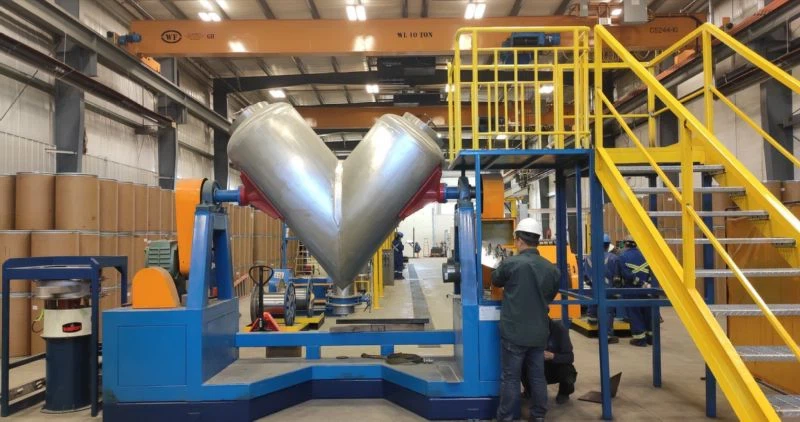
If you’re tired of parts that wear out too fast, cause unplanned shutdowns, and add to your scrap costs, reach out to talk through your needs. We’ll break down exactly what parts work best for your specific steel strip processing line, no fine print, no upselling you on stuff you don’t need. Just straight talk about parts that hold up when your line is running hard.
Other Auxiliary Equipment References
- Ashby, M.F., Jones, D.R.H. Engineering Materials 1: An Introduction to Properties, Applications, and Design. Butterworth-Heinemann, 2012.
- Dieter, G.E. Mechanical Metallurgy. McGraw-Hill, 1986.
- Steel Handbook. American Iron and Steel Institute, 2005.
- Tungsten Carbide Coatings for Wear Applications. National Institute of Standards and Technology, 2018.
- Slitting and Leveling of Steel Strip: Best Practices. Steel Technology International, 2021.
Three Water Machinery Co., Ltd.
Three Water Machinery Co., Ltd. is one of the most reliable manufacturers and suppliers of steel strip processing machinery in China. With abundant experience, we warmly welcome you to buy advanced equipment for sale here and get quotation from our factory. Contact us for more details.
Address: No.15, Jiaye Road, Liuanzhuang Industrial Park, Beichen District, Tianjin, China
E-mail: sales@eqet.com
WebSite: https://www.eqet.com/
