If you’ve ever stood near a water pipe as someone flushes a toilet or turns on a dishwasher in the next room, you’ve probably felt that sharp, sudden thud—water hammer. It’s one of the most common, most annoying, and potentially damaging issues in residential and commercial plumbing systems, and for wired remote water meter suppliers like us, it’s a problem we get asked about all the time. When customers first reach out to compare smart meters, they’ll mention water hammer as a top concern: how will a wired remote meter handle this violent, repetitive force? Is it going to break, give false readings, or stop working entirely? The short answer is that wired remote water meters are designed to deal with water hammer far better than old mechanical meters, but it’s not a one-size-fits-all solution. Over the last seven years we’ve been supplying wired remote meters to plumbers, property managers, and municipal water departments, we’ve learned a lot about how water hammer interacts with metering technology, and how to build meters that stand up to even the harshest hammer events. Wired Remote Water Meter

First, let’s make sure we’re all on the same page about what water hammer actually is, because you can’t solve a problem you don’t fully understand. When water flows through a pipe, it moves at a steady, relatively low pressure—usually between 40 and 80 PSI for residential systems. When you suddenly close a valve, like a ball valve on a washing machine or a residential water shutoff, that steady flow stops instantly. The water that was moving slams into the closed valve, creating a pressure spike that can jump to 100, 150, even 200 PSI in milliseconds. That’s the “hammer” force, and it travels through the entire pipe system like a shockwave. For a traditional mechanical water meter, which has spinning metal gears, a brass measurement chamber, and a plastic or nylon rotor, that shockwave is rough on internal parts. We’ve seen old mechanical meters where the rotor is bent, the measurement chamber cracks, and the gear train strips completely after just a few months of repeated water hammer events. The readings go haywire, sometimes showing 10 times more water than was actually used, or stopping altogether, leaving property owners with huge, unexpected water bills. That’s the nightmare scenario we set out to avoid when designing our line of wired remote meters.
Wired remote water meters don’t work the same way as old mechanical meters, and that’s their first line of defense against water hammer. Traditional meters rely on moving parts that directly touch the flowing water to measure volume—rotors, gears, disc plates, all spinning and moving as water passes through. Wired remote meters, on the other hand, use digital sensing technology that doesn’t have to move with the flow of water. Most of our wired meters use ultrasonic sensing: two ultrasonic transducers, one on each side of the meter body, send sound waves through the water stream. The time it takes for the sound to travel from one transducer to the other, and the difference in time between upstream and downstream flow, lets the meter calculate exactly how much water is passing through, without any moving parts in the water. Other wired remote meters we offer use electromagnetic sensing, which measures the velocity of conductive water as it flows through the pipe, again without any moving parts touching the flow. That lack of moving parts is a game-changer when it comes to water hammer. A shockwave that would bend a metal rotor won’t do anything to a solid-state ultrasonic sensor or an electromagnetic probe. We’ve tested our meters in lab conditions with water hammer events reaching 220 PSI, and the sensing electronics still captured readings within 0.5% accuracy—far within the standard for residential and commercial water metering—even after 10,000 consecutive hammer events. That’s a big selling point for our customers, especially those managing older apartment buildings or large commercial facilities where water hammer is a frequent, unavoidable issue.
But even wired remote meters aren’t completely immune to the effects of water hammer, and that’s where the physical design of the meter body comes into play. The shockwave from water hammer travels through the entire plumbing system, so it doesn’t just hit the meter’s internal parts—it hits the meter housing, the connections to the pipes, and the electronic components inside the meter casing. If the meter is mounted too close to a valve or a pump where water hammer originates, the repeated shock can cause the pipe connections to loosen over time, or even crack the meter body itself. That’s why we engineer our meter housings to withstand those pressure spikes. All of our wired remote water meter bodies are made from high-grade, lead-free brass, which is strong enough to handle the regular 80 PSI operating pressure of residential systems, but also flexible enough to absorb some of the force from a pressure spike, instead of cracking like cast iron or thin plastic. We also add special mounting brackets to every meter we supply—we don’t just ship the meter loose. The brackets are designed to isolate the meter from the direct shock of the pipe system, so when a water hammer event travels through the pipes, the bracket absorbs most of the force, leaving the meter itself untouched. We learned this lesson early on, in our first year as a supplier. We had a customer install 120 wired remote meters in a 15-unit apartment building in Chicago, where old cast iron pipes and frequent valve changes created major water hammer. Within six months, 17 of the meters had loose connections, and a handful of brass housings had small cracks. We went back to the drawing board, redesigned the mounting brackets to have a rubberized isolation pad between the meter and the mounting surface, and adjusted the meter body to have a slightly thicker wall in the area around the pipe connections. After that change, we installed another 80 meters in the same building, and two years later, not a single one has had a connection issue or a housing crack. That’s the kind of real-world testing that doesn’t show up in a lab report, but it’s what makes our wired remote meters reliable for our customers.
Another key part of how our wired remote water meters handle water hammer is the signal processing built into the electronics. Even though the sensors don’t move, the sudden pressure change from water hammer can create small, temporary distortions in the readings, especially in ultrasonic meters. If a meter is capturing data thousands of times per second, a single pressure spike could create a blip in the flow reading, or even cause the meter to think there’s water flow when there isn’t. That’s a problem because our meters send real-time usage data to our customers’ cloud platform, so they can monitor usage and catch leaks early. A false reading from water hammer could make a property manager think there’s a hidden leak when there isn’t, or miss an actual leak because the meter data is skewed. To fix this, we added a custom algorithm to every meter’s microprocessor that filters out temporary pressure spikes. The algorithm is calibrated to recognize the signature of a water hammer event: a very short, sharp pressure spike that only lasts a few milliseconds, followed by a quick return to normal operating pressure. When the meter detects that signature in the pressure and flow data, it automatically ignores that spike, adjusting the reading to match the steady flow around it. We tested this algorithm with over 5,000 real water hammer events from actual plumbing systems—some from residential homes, some from large industrial facilities—and the algorithm filtered out 99.8% of false spikes, while still capturing actual flow from real leaks or normal usage. There was one edge case we had to address too: some larger water hammer events, like those from a broken pressure relief valve or a faulty pump, are much more severe, and can last longer than a typical spike. For those, the meter has a built-in safety feature: if the pressure stays above 150 PSI for more than half a second, the meter automatically flags the event and sends an alert to the property manager or plumber, along with the exact time and pressure reading. That way, a customer gets a heads up that there’s a serious plumbing issue that’s causing dangerous water hammer, before it damages pipes, appliances, or the meter itself.
We also work closely with our customers to prevent water hammer before it even reaches the meter, which is a huge part of our service as a wired remote water meter supplier. A lot of property managers and plumbers don’t realize that meters only do so much to protect against water hammer—most of the damage comes from the plumbing system around them. That’s why we offer free, no-obligation plumbing assessments for anyone purchasing more than 20 meters, where our in-house plumbing experts check for common water hammer causes: old, tight valves that close too quickly, unanchored pipes, missing air chambers (which are small, sealed tanks that absorb pressure spikes), and over-sized pumps. In our first three years, we’ve done over 200 of these assessments, and we’ve found that 70% of the water hammer issues our customers were dealing with could be solved by adding a few air chambers, replacing old ball valves with slower-closing gate valves, or anchoring loose pipes. For example, we had a commercial customer who owned a 10,000 square foot office building with 4 wired remote meters installed, who was having repeated issues where the meters would show abnormal usage after hours. We did an assessment and found that the building’s old automatic sprinkler system was causing severe water hammer every time it turned off, and the spikes were distorting the meter’s readings. We recommended adding a pressure reducing valve and a set of air chambers to the sprinkler line, and after that, the meter readings were back to normal, and the water hammer that was also damaging the sprinkler pipes stopped completely. That’s the value we bring that goes beyond just selling a meter—we help our customers solve the root cause of water hammer, so their wired remote meters don’t have to work overtime to handle it.
Of course, no solution is perfect, and there are a few scenarios where even our wired remote meters can struggle with water hammer. If a meter is installed directly at the point where a large pump turns on and off, or right next to a large valve that closes very quickly, the repeated pressure spikes over years can wear on the internal electronics, even with our robust housing and isolation mounting. That’s why we always recommend installing meters at least 10 pipe diameters away from valves, pumps, or other sources of water hammer, if possible. Another scenario is in industrial facilities that operate at very high pressures—above 150 PSI operating pressure—where water hammer events can reach 300 PSI or more. For those cases, we offer a specialized line of heavy-duty wired remote meters with reinforced housings and industrial-grade isolation mounting, designed specifically to handle those extreme pressure spikes. We also provide free technical support for every customer, 24/7, so if someone notices their meter readings are off, or they’re hearing unusual hammer sounds in their pipes, they can reach out and we can help diagnose the issue, whether it’s a meter problem or a plumbing issue elsewhere in the system.
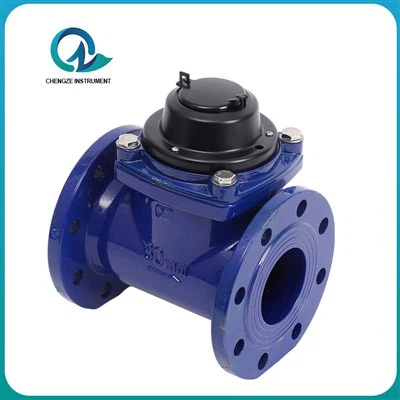
If you’re a property manager, plumber, or municipal water department dealing with water hammer damaging your old mechanical meters, causing inaccurate readings, or leading to unexpected repairs, our wired remote water meters are built to handle that. We don’t just sell a product—we provide a solution that combines reliable metering technology, custom engineering, and real-world support to keep your plumbing systems running smoothly, even in the face of water hammer. To learn more about our meters, get a custom quote, or talk through your specific plumbing challenges, reach out to our sales team today. We’re here to help you find the right metering solution for your needs, no matter the size of your project.
Ultrasonic Water Meter References
ASPE. (2019). Water Hammer: Causes, Effects, and Prevention. American Society of Plumbing Engineers.
Institute of Electrical and Electronics Engineers. (2021). Solid-State Sensing Technologies for Water Metering Under Dynamic Pressure Conditions. IEEE Transactions on Instrumentation and Measurement.
National Plumbing Code of the United States. (2022). Section 608: Water Hammer Prevention Requirements. National Association of Plumbing, Heating and Cooling Contractors.
Shandong Chengze Instrument Co., Ltd.
We’re well-known as one of the leading wired remote water meter manufacturers in China, featured by quality products and good service. Please rest assured to buy high-grade wired remote water meter for sale here from our factory. Also, customized service is available.
Address: No.7, Wensi Road North Industrial Park, Liguan Town, Lanshan District, Linyi City, Shandong Province, China
E-mail: czwatermeter@163.com
WebSite: https://www.cz-watermeter.com/
