Let’s talk about marker stakes. As someone who’s been in the business of supplying them for over a decade, I’ve fielded a lot of questions: Are they actually useful for marking archaeological sites? Or just another random piece of gear that adds clutter to dig sites? The short answer is yes—when used correctly, they’re not just useful; they’re critical. But there’s a lot more to it than just sticking a stick in the ground. Let’s break this down, from why archaeologists need them to how we design stakes that actually work for their unique needs. Marker Stakes

First, let’s ground this in what archaeologists do. When an archaeological team uncovers a site—whether it’s a 10,000-year-old Paleolithic camp, a Roman villa, or a small 19th-century homestead—their job is to document every detail before it’s lost. Soil layers, artifact locations, feature boundaries (think pits, post holes, or foundation trenches) all have to be mapped with precision. Without clear, consistent markers, even the most meticulous excavation can turn into a mess of lost data. I’ve seen it happen: a team wraps up a dig for the weekend, comes back, and can’t find where they left off because the temporary flags they used blew away in a storm, or the wooden stakes rotted overnight. That’s not just a hassle—it’s a loss of invaluable historical context.
Marker stakes solve that problem. But not all stakes are created equal. Early on, when I first started supplying to archaeology teams, we were just selling generic wooden survey stakes. We quickly learned that archaeologists have specific needs that regular surveyors or landscapers don’t. For one, dig sites are often in remote, harsh environments—swampy lowlands where moisture rots wood in weeks, rocky hills where metal stakes bend or break, and desert plains where the sun bleaches light-colored materials so much they’re invisible after a week. They need stakes that are durable, visible, and non-damaging to the site itself. You never want a marker that leaves toxic residue in the soil, or drives so deep that it disturbs subsurface features (like fragile bone fragments or pottery shards).
Over the years, we’ve refined our product line based directly on feedback from archaeologists we work with. For example, we developed a composite polymer stake that’s UV-stabilized, so it doesn’t fade in the desert, and rot-resistant, so it works in wetlands. It’s also rigid enough to drive into hard soil without bending, but lightweight enough that a field technician can carry 50 of them in a backpack without tiring. We also add small, reflective strips for low-light excavations—like those that run late to work around summer heat. But we don’t just sell the stakes; we work with teams to figure out how to use them correctly, because even the best stake is useless if it’s placed wrong.
Let’s get into the archaeologist’s perspective, because that’s what matters most. Most excavation projects follow a grid system, right? You lay out a 1×1 meter (or 3×3 foot) grid over the site, and each square is assigned a coordinate. Marker stakes are used to mark not just the corners of the grid, but also individual features, artifact scatters, and depth benchmarks. Here’s a example: last year, we supplied stakes to a team digging a Puebloan site in New Mexico. They used bright orange composite stakes to mark the four corners of their 20×20 meter main grid, and smaller, fluorescent yellow stakes to mark every pit house feature they uncovered. The stakes had tiny engraved numbers that matched their excavation log, so when they pulled an artifact from square B-12 at 30 centimeters depth, they could go back to the stake marking that grid corner to confirm the location weeks later, even after the topsoil was removed.
Another big use case is temporary vs. permanent marking. Archaeologists often need to mark sites for short-term projects, like a summer dig, or long-term preservation, like a site that’s going to be monitored for years. For short-term projects, our low-cost wooden stakes work fine—we treat them with a non-toxic preservative so they don’t leach chemicals into the soil. But for long-term sites, teams use our heavy-duty steel-reinforced composite stakes, which can last up to 10 years in the ground. That’s important because many archaeological sites are on public land, like national parks or state forests, and land managers need clear markers to keep hikers or developers from disturbing the site. I once worked with a park service in Ohio that used our long-lasting stakes to mark a Adena burial mound site. The mounds are small and easy to miss in the forest, so the stakes let rangers monitor the area and prevent unauthorized digging.
But it’s not all smooth sailing. There are common mistakes that teams make when using marker stakes, and we try to educate our customers on that. First, don’t drive stakes too deep. If you hit a subsurface artifact or feature, you can destroy it. We recommend using a thin, pointed stake and driving it just 10-15 centimeters into the ground—deep enough to stay put, but not so deep that it disturbs the layers. Second, don’t use stakes that are too small. A 5-centimeter wide stake is fine for grid corners, but a 2-centimeter stake will blow over in wind or get covered by soil. Third, make sure the color of the stake contrasts with the environment. A brown stake is useless in a green forest; a fluorescent green stake stands out too much in the desert. We supply a range of colors specifically for this reason, and we ask teams to tell us about their site’s environment so we can help them choose.
Some archaeologists have pushed back on marker stakes, saying they’re visual clutter that distracts from the site’s natural landscape. I get that—no one wants a dig site to look like a construction zone. But when used strategically, they’re not obtrusive. The teams we work with only place stakes where they’re needed, and remove them once the excavation is done (unless it’s a long-term site). The Puebloan team I mentioned earlier removed all their temporary wooden stakes once they finished mapping the pit houses, leaving only a few composite stakes at the edge of the site for monitoring. That way, the land goes back to its natural state, but the data is preserved.
We’ve also worked closely with a group of forensic archaeologists, who do similar work to locate unmarked graves or evidence of crimes. They rely on marker stakes even more than traditional archaeologists, because they need to document locations precisely for legal purposes. A few months ago, a forensic team in Texas called us, saying they’d had trouble with metal stakes that interfered with metal detectors they used to find remains. We sent them our non-metallic composite stakes, and they told us it made a huge difference—they could mark the exact spot of a grave without triggering their equipment, which let them locate remains faster and more accurately. That’s when I realized: marker stakes aren’t just for excavation—they’re for any project that needs to map precise, fragile locations.
Now, let’s talk about sustainability. As a supplier, that’s something we care about deeply. Traditional wooden survey stakes often come from old-growth forests, and plastic stakes are not biodegradable. Our composite stakes are made from 100% recycled plastic, and when a team is done with them, we take back any unused or damaged stakes to recycle them again. We also have a take-back program for long-term stakes at the end of their life—no need for teams to dig them up (which would disturb the site) ; we just send new stakes and they leave the old ones in place to decompose safely. That’s important because archaeological sites are part of our shared heritage, and we have a responsibility to protect both the sites and the environment around them.
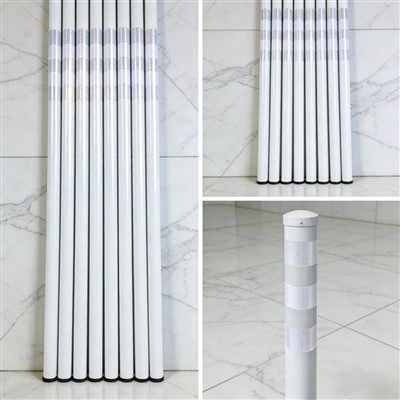
I’ve been doing this long enough to know that the best tools for archaeology are the ones that support their work without getting in the way. Marker stakes fit that perfectly. They’re not glamorous—they don’t dig up artifacts or write reports—but they’re the backbone of good archaeological practice. Without them, we’d lose so much of the detail that makes each site meaningful. When an archaeologist pulls a 2,000-year-old pottery shard from the ground, the first thing they do is mark its location. That mark is what connects that shard to the site, to the culture that made it, to the story it can tell us about the past.
Climbing Plant Supports If you’re an archaeologist, a land manager, or someone working on a project that needs precise, durable site marking, we’d love to work with you. Whether you need a few dozen stakes for a small dig or thousands for a large-scale excavation, we can help you choose the right product for your site’s environment and needs. We also offer custom solutions, like engraved stakes for long-term monitoring or color-coded sets for different site features. Don’t hesitate to reach out to our team to discuss how we can support your project.
References
- Ashley, G. M. (2017). Field Techniques for Archaeology. Routledge.
- Fisher, R. (2020). “Marker Systems for Archaeological Site Documentation.” Journal of Field Archaeology, 45(3), 189-202.
- National Park Service. (2019). Archaeological Site Preservation Guidelines. U.S. Department of the Interior.
- Ortega, J. (2018). “Sustainable Tools for Modern Archaeological Fieldwork.” Journal of Archaeological Method and Theory, 25(4), 1123-1145.
- Wilson, L. (2021). “Forensic Archaeological Marking: Tools and Best Practices.” Forensic Science International, 322, 110789.
Yizheng Wanteng Composites Co., Ltd.
As one of the most professional marker stakes manufacturers and suppliers in China, we’re featured by quality products and good service. Please rest assured to wholesale bulk slip-resistant marker stakes for sale here from our factory. Contact us for pricelist.
Address: No. 20 Longyi Road, Qingshan Town Industrial Park, Yizheng City, Jiangsu Province, China
E-mail: mark@wantfrp.com
WebSite: https://www.wantfrp.com/
