If you’ve ever stood behind the wheel of a modern car, taking note of the crisp wind through the side window or the quiet hum of the engine at highway speeds, you’re already interacting with a component most drivers never think about: aluminium spacer bars. As a supplier of these bars, I’ve spent years walking automotive engineers through their ins and outs, and I’m still surprised at how many of us overlook their quiet, critical role in building safer, more efficient, and more durable vehicles. Today, I want to break down exactly what aluminium spacer bars do in cars, why they’ve become non-negotiable for almost every new vehicle on the road, and how our team works to make sure every bar we ship meets the exact standards the automotive industry demands. Aluminium Spacer Bar
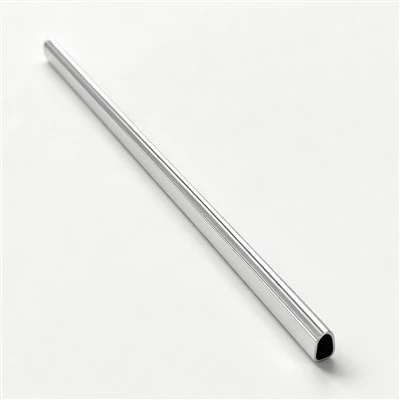
Let’s start with the basics. If you’re not in the automotive manufacturing space, you might wonder what a spacer bar even is. At its core, it’s a long, rigid strip of extruded aluminium, precision-cut to specific lengths, with consistent thickness and edge tolerances. It’s not a flashy part—no one buys a car because its spacer bars are top-tier—but it’s the kind of part that makes every other system in a vehicle work as intended. Unlike steel spacer bars, which are heavier and prone to corrosion if not coated properly, aluminium’s natural corrosion resistance, high strength-to-weight ratio, and malleability make it the only practical choice for 90% of automotive applications these days.
One of the most common uses for our aluminium spacer bars is in automotive glazing—aka the windows. Every side window, sunroof, and rear windshield in a car is assembled with these bars, and there’s a method to how they’re placed. When a manufacturer installs glass panels into a door or roof frame, they need small, evenly spaced gaps between the glass and the metal frame to accommodate two key things: thermal expansion and vibration. Aluminium has a coefficient of thermal expansion that’s nearly identical to that of automotive-grade tempered glass. That means when the car bakes in the summer sun, both the glass and the spacer bar expand at almost the same rate—no uneven pulling, no cracking, no gaps that let wind noise or water seep in. If a manufacturer used steel spacers here, the steel would expand faster than the glass, leading to stress fractures over time. Plastics would soften or warp in extreme heat. Aluminium is the sweet spot.
We work closely with several major door module suppliers on this exact part. For example, when a team is designing a new electric SUV’s side doors, they might need 12 individual spacer bars per door, each cut to within 0.1mm of a specified length, with a smooth anodized or powder-coated finish to avoid scratching the glass during installation. A scratch on a windshield can weaken its structural integrity, so that finish isn’t just cosmetic—it’s a safety requirement. I remember one early client who tried switching to a lower-cost uncoated aluminium bar to cut costs, only to end up with a 7% return rate from glass scratches in their first production run. That’s the kind of detail we don’t cut corners on, because we know one bad batch of spacer bars can derail months of production planning for a partner.
Next up, and growing in importance as the industry shifts to electric vehicles (EVs), is battery module assembly. This is where aluminium spacer bars have become a star player in the last five years. EV batteries are made up of dozens, sometimes hundreds of individual lithium-ion cells, stacked together in modules, then housed in a large metal enclosure that forms the core of the car’s chassis. Each cell generates heat when it charges or discharges, and if that heat isn’t evenly distributed, a single cell can overheat, reduce its lifespan, or even create a fire risk. That’s where spacer bars come in.
In EV battery modules, we supply thin, thermally conductive aluminium spacer bars that sit between individual cells and act as both a thermal barrier and a structural support. Wait—thermal barrier? No, actually, they’re more like thermal conductors that spread heat evenly across the entire module. When coolant lines run along the bottom of the battery enclosure, these bars carry that cold to each cell, keeping temperatures within the ideal 25–40°C range for battery performance. But they also have to be strong enough to hold the cells in place, even if the car hits a pothole or is involved in a minor collision. Aluminium’s strength-to-weight ratio is critical here, too—every gram we save on parts for an EV extends its driving range. A steel spacer would add unnecessary weight, forcing the manufacturer to use more battery cells to compensate, which eats into range and increases cost.
I talked to an engineer at a German EV startup last year who told me their entire battery design hinges on our spacer bars. They originally used a thicker, heavier steel bar, but when they switched to our 2mm extruded aluminium bars, they cut 12kg from the total battery module weight—enough to add an extra 15km of range per full charge. That’s the kind of impact a seemingly small component can have. We also work with our partners to design custom bars with small notches or holes that fit exactly with the module’s cell geometry, so there’s no wasted space between cells. Every millimetre counts when you’re trying to cram as much battery capacity as possible into a tight chassis.
Another key application is in chassis and body panel assembly, specifically for joint stability and noise, vibration, and harshness (NVH) reduction. Every car has dozens of metal panels that need to be joined together—door frames, roof rails, floor pans—with gaps that have to be consistent to ensure the body is rigid, aerodynamic, and quiet. Aluminium spacer bars act as precision shims during assembly, ensuring that when two panels are welded or bolted together, the gap between them is exactly the right size. If the gap is too big, the weld is weak, and the panel can shift at high speeds, creating wind noise or even affecting the car’s crashworthiness. If the gap is too small, the metal panels can warp during welding, leading to fit issues or water leaks.
What I love about this part of the job is that it’s all about consistency. A chassis manufacturer might order 50,000 spacer bars in a month, and every single one has to be within 0.05mm of the same thickness. No exceptions. We use computer-controlled extrusion and cutting machines to make every bar identical, and we run quality checks on 10% of every batch before it ships. Last quarter, we had a client come to us because their old spacer supplier was delivering bars with varying thicknesses, leading to 2% of their cars having misaligned door panels that required rework at the factory. We adjusted our cutting process, and their rework rate dropped to 0.1% within three months. That’s the kind of reliability automotive partners need.
I’d be remiss if I didn’t mention corrosion resistance, too. For decades, car manufacturers used steel for structural components, but steel rusts if it’s exposed to road salt, water, or humidity. Aluminium, on the other hand, forms a thin, invisible oxide layer when it’s exposed to air that prevents further corrosion. That’s why aluminium spacer bars are ideal for underbody applications, like mounting the fuel tank or exhaust system. Even for vehicles in cold climates, where road salt is used heavily in winter, our anodized or powder-coated aluminium bars hold up for the entire life of the car—10+ years in most cases. We also supply bars that are compatible with adhesive bonding, which is becoming more common in modern car assembly. Adhesives create stronger, lighter joints than welding, but they require consistent gap sizes to cure properly. Our spacer bars ensure that gap is always correct, so the adhesive bonds evenly and lasts.
As the automotive industry continues to evolve, I’ve seen new uses for aluminium spacer bars popping up every year. Take the growing trend of sunroofs and panoramic roofs in SUVs and pickup trucks. These large glass panels need support across the entire roof, and spacer bars are used to distribute the weight of the glass evenly across the roof frame, preventing sagging over time. In autonomous vehicles, which rely on a network of cameras and sensors mounted on the roof or bumpers, spacer bars are used to mount these sensors with precise alignment, ensuring the camera’s field of view is perfect and the sensors don’t shift during driving. We’re already working on custom spacer bars for a few autonomous vehicle developers that hold lidar sensors with a tolerance of less than 0.5 degrees—small enough that a single misaligned sensor would throw off the entire autonomous driving system.
But here’s the thing that makes being a supplier of aluminium spacer bars rewarding: it’s not just about selling a part. It’s about collaborating with automotive teams to solve their specific problems. Last year, a partner came to us with a challenge: they needed spacer bars that could withstand high temperatures for their new hybrid vehicle’s engine bay, where temperatures can hit 150°C. Most standard aluminium bars would soften at that temperature, so we worked with our metallurgists to develop a custom alloy that retains its strength at high heat, without adding extra weight. That’s the kind of custom solution that keeps us in business, and that’s what the automotive industry needs—suppliers who don’t just deliver parts, but help design parts.
I also want to be clear about why aluminium is the right material for these jobs, now more than ever. The push for lighter, more fuel-efficient vehicles (and EVs with longer range) has made aluminium the go-to material for almost every new car. In 2023, the average car used 180kg of aluminium, up from 150kg in 2018, and that number is projected to hit 250kg by 2030. Spacer bars are a small but critical part of that aluminium shift. They’re one of the easiest ways for manufacturers to reduce weight without sacrificing strength, safety, or durability. Unlike steel, aluminium is also 100% recyclable, which aligns with the industry’s push for more sustainable manufacturing practices. Every aluminium spacer bar we supply is made with 30–40% recycled aluminium, and we make sure our scrap from the cutting process is sent back to be re-melted into new bars, so almost nothing goes to waste.
Of course, there are challenges. The automotive industry has extremely strict standards for every component—ISO 9001 certification, crash test requirements, corrosion resistance ratings, and more. We don’t cut corners on quality control. Every batch of spacer bars goes through three checks: first, after extrusion, to check the alloy composition and thickness; second, after cutting, to check length and edge smoothness; third, before shipping, to confirm finish and tolerance. We also keep detailed records of every batch, so if a partner has an issue, we can trace it back to the exact extrusion run and identify any potential problems quickly. That level of transparency is non-negotiable in this industry, where a single defective part can lead to a recall costing millions of dollars.

At the end of the day, aluminium spacer bars are a perfect example of how even the most unassuming parts play a huge role in modern automotive manufacturing. They keep windows sealed and quiet, they protect EV batteries from overheating and damage, they ensure chassis panels fit correctly and safely, and they help the industry move toward lighter, more sustainable vehicles. As a supplier, we’re proud to be part of that process. If you’re an automotive engineer, manufacturer, or parts buyer looking for reliable, custom aluminium spacer bars for your next project, we’d be happy to walk you through our products, answer questions about our processes, and find a solution that fits your needs. Don’t hesitate to reach out to start a conversation.
Machine Fill Molecular Sieve References:
- Aluminum Association. (2024). Automotive Aluminum Use Trends & Specifications. Retrieved from industry technical documents on automotive material standards
- International Organization for Standardization (ISO). (2022). ISO 9001:2015 Quality Management Systems Requirements for Automotive Component Manufacturing
- SAE International. (2023). NVH Reduction in Automotive Assembly: The Role of Precision Spacers and Shim Components
- International Energy Agency (IEA). (2023). Electric Vehicle Battery Thermal Management: Material Selection for Module Assembly
- American Iron and Steel Institute. (2022). Corrosion Resistance Comparison of Automotive-Grade Aluminum vs. Steel Components
Renqiu City Xinjian Metal Products Co., Ltd.
Renqiu City Xinjian Metal Products Co., Ltd. is one of the most professional aluminium spacer bar manufacturers and suppliers in China. With abundant experience, we warmly welcome you to wholesale customized aluminium spacer bar from our factory. If you have any enquiry about free sample, please feel free to email us.
Address: Caicun Dajie Village, Changfeng Town, Renqiu City, Hebei Province China
E-mail: melody@xinjianmetal.com
WebSite: https://www.xjglassspacer.com/
