What is the definition of a humanoid robot skeleton? Well, let me break it down for you from the perspective of someone who’s in the business as a humanoid robot skeleton supplier. Humanoid Robot Skeleton
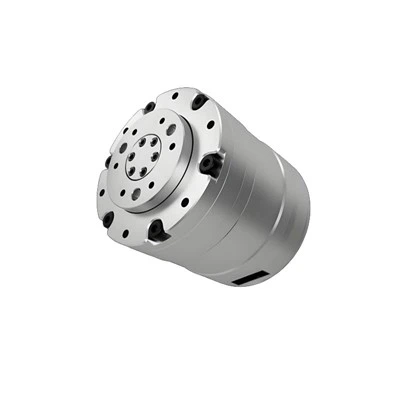
First off, a humanoid robot skeleton is, in simple terms, the structural framework of a humanoid robot. It’s like the bones in our own bodies. Just as our skeletons provide support, protection, and a means for movement, a humanoid robot skeleton does the same for the robot it’s part of.
When we think about the basic features of a humanoid robot skeleton, shape is one of the first things that come to mind. It’s designed to mimic the general form of a human body. So, you’ll typically see components that resemble a torso, arms, legs, and sometimes a head. This similarity in shape allows the robot to perform tasks and move in ways that are comparable to humans.
For example, the arms of the skeleton are often structured with joints that can bend and rotate, much like our elbows and shoulders. This enables the robot to pick up objects, manipulate tools, or perform gestures. The legs, on the other hand, are built in a way that allows for walking, running, or other types of locomotion. A well – designed humanoid robot skeleton will have a stable gait, similar to how we humans walk without constantly losing our balance.
Materials play a crucial role in defining a humanoid robot skeleton. We need to pick materials that are strong yet lightweight. Metals like aluminum are popular choices. They offer good strength, which is necessary to support the weight of other robot components such as motors, sensors, and batteries. At the same time, aluminum is lightweight, which helps the robot move more efficiently. Another material that’s gaining traction is carbon fiber. It’s incredibly strong for its weight, making it ideal for parts of the skeleton that need to endure high stress.
Now, let’s talk about movement. The joints in a humanoid robot skeleton are its key to mobility. These joints are engineered to mimic the range of motion of human joints as closely as possible. There are different types of joints, such as revolute joints (which allow rotation around an axis, like our knees) and prismatic joints (which enable linear motion). The design of these joints is a delicate balance. We want to give the robot enough freedom of movement to perform complex tasks, but we also need to ensure that the joints are stable and reliable.
Sensors are also an integral part of the definition of a humanoid robot skeleton. These sensors provide feedback to the robot’s control system, allowing it to adjust its movements and interact with its environment. For instance, force – sensing resistors can be placed in the joints to measure the amount of force being applied. This helps the robot know how hard it’s gripping an object or how much pressure it’s exerting while walking. Inertial Measurement Units (IMUs) can be used to measure the robot’s orientation and acceleration. This information is crucial for maintaining balance and controlling movement.
In terms of power and actuation, most humanoid robot skeletons rely on electric motors. Electric motors are preferred because they’re efficient, easy to control, and can be precisely tuned to provide the right amount of torque for different tasks. Some advanced skeletons may also use hydraulic or pneumatic actuators, which can generate a lot of force but require more complex systems to operate.
As a humanoid robot skeleton supplier, I’ve seen the wide range of applications that these skeletons can be used for. In the field of research, humanoid robots are used to study human movement, behavior, and interaction. They can serve as testbeds for developing new algorithms and technologies. For example, in a robotics lab, a humanoid robot with our skeleton can be used to test how well a new balance – control algorithm works in real – life situations.
In the industrial sector, humanoid robots can perform tasks that are dangerous or repetitive for humans. They can work in factories, handling heavy objects, operating machinery, or performing inspections in hazardous environments. For instance, in a chemical plant, a humanoid robot could be used to inspect pipelines, where human workers might be at risk of exposure to toxic chemicals.
There’s also a growing interest in using humanoid robots in the service industry. They can be used in hotels to greet guests, carry luggage, or provide information. In healthcare, humanoid robots can assist with patient care, such as helping to lift and move patients.
When it comes to customizing humanoid robot skeletons, we understand that different customers have different needs. Some may require a skeleton with a specific range of motion for a particular task. Others may need a skeleton that can support a certain weight of additional components. That’s why we offer customization services. We work closely with our customers to understand their requirements and then design and manufacture a skeleton that meets their exact specifications.
If you’re in the market for a humanoid robot skeleton, whether you’re a researcher, an industrialist, or someone with a vision for using humanoid robots in a new and innovative way, I encourage you to get in touch with us. We have the expertise and the resources to provide you with a high – quality, reliable humanoid robot skeleton. Our team of engineers and designers is always ready to work with you to bring your robot project to life. So, don’t hesitate to reach out for procurement and let’s start a great conversation about how we can collaborate.
Heat Pump Compressor Parts References
- Siciliano, Bruno, and Oussama Khatib, eds. Springer Handbook of Robotics. Springer, 2016.
- Asada, Haruhiko, and Kevin J. Waldron. Robotic Mechanisms and Manipulation: Mathematics, Models, and Algorithms. Wiley, 2016.
Jiangsu Zhengfang Dynamics Technology Co., Ltd.
As one of the most professional humanoid robot skeleton manufacturers and suppliers in China, we’re featured by quality products and good price. Please rest assured to buy customized humanoid robot skeleton made in China here from our factory. Contact us for pricelist.
Address: Building 3, No. 69 Feitian Avenue, Jiangning District, Nanjing City, Jiangsu Province
E-mail: hanks.liu@zfdynamics.com
WebSite: https://www.zhengfangdongli.com/
