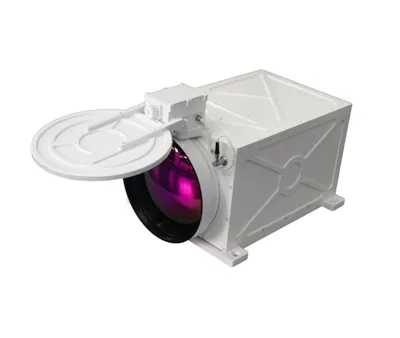
In the realm of advanced imaging technology, Short-Wave Infrared (SWIR) cameras have emerged as powerful tools with a wide range of applications, from industrial inspection and surveillance to scientific research and agriculture. As a supplier of SWIR camera lenses, I’ve had the privilege of witnessing firsthand the remarkable capabilities these lenses bring to the table. However, like any technology, SWIR camera lenses are not without their limitations. Understanding these limitations is crucial for both our customers and us as we strive to provide the best solutions for their imaging needs. SWIR Camera Lens
1. Wavelength Range and Sensitivity
One of the primary limitations of SWIR camera lenses is related to their wavelength range and sensitivity. SWIR light typically spans from approximately 0.9 to 1.7 micrometers, which lies between the visible and mid-infrared spectra. While this range allows SWIR cameras to detect features that are invisible to the human eye and traditional visible light cameras, it also poses challenges.
First, the availability of light within the SWIR range can be limited in certain environments. Natural sunlight contains SWIR radiation, but its intensity varies depending on factors such as time of day, weather conditions, and atmospheric composition. In indoor or low-light outdoor settings, artificial SWIR illumination sources may be required to ensure adequate image quality. However, these sources can be expensive, power-hungry, and may not cover the entire field of view evenly.
Second, the sensitivity of SWIR camera lenses can degrade at the edges of the wavelength range. As the wavelength approaches the upper or lower limits of the SWIR spectrum, the quantum efficiency of the detector and the transmission of the lens materials decrease. This means that the camera may have difficulty detecting faint signals or distinguishing fine details in these regions. For applications that require high sensitivity across the entire SWIR range, such as hyperspectral imaging, this limitation can be a significant drawback.
2. Optical Aberrations
Optical aberrations are another challenge faced by SWIR camera lenses. Aberrations are deviations from the ideal behavior of an optical system, which can cause image distortion, blurring, and reduced contrast. In SWIR lenses, several types of aberrations can occur, including spherical aberration, chromatic aberration, and coma.
Spherical aberration occurs when light rays passing through different parts of the lens are focused at different points along the optical axis. This results in a blurred image, especially at the edges of the field of view. Chromatic aberration, on the other hand, is caused by the different refractive indices of the lens materials for different wavelengths of light. In SWIR lenses, where the operating wavelength range is relatively wide, chromatic aberration can be particularly pronounced, leading to color fringing and reduced image sharpness.
Coma is an aberration that affects off-axis objects, causing them to appear comet-shaped instead of round. This can be a problem for applications that require accurate imaging of objects located away from the center of the field of view, such as surveillance and remote sensing. To minimize these aberrations, SWIR lens designers often use complex lens designs, multiple lens elements, and specialized materials. However, these solutions can increase the cost and size of the lenses, making them less suitable for some applications.
3. Size, Weight, and Cost
The size, weight, and cost of SWIR camera lenses are also important considerations. Compared to visible light lenses, SWIR lenses tend to be larger and heavier due to the need for specialized materials and complex optical designs. This can be a significant limitation for applications where portability and compactness are essential, such as unmanned aerial vehicles (UAVs) and handheld devices.
In addition, the cost of SWIR camera lenses is generally higher than that of visible light lenses. The materials used in SWIR lenses, such as germanium, silicon, and chalcogenide glasses, are more expensive and difficult to process than the materials used in visible light lenses. The manufacturing processes for SWIR lenses are also more complex and require higher precision, which further increases the cost. For budget-conscious customers, these factors can make SWIR camera lenses less attractive, even if they offer superior performance in certain applications.
4. Environmental Factors
Environmental factors can also have a significant impact on the performance of SWIR camera lenses. Temperature, humidity, and dust can all affect the optical properties of the lens materials and the functionality of the camera system.
Temperature changes can cause the lens materials to expand or contract, which can lead to changes in the focal length and optical performance of the lens. In extreme temperature environments, such as high-temperature industrial settings or cold outdoor environments, these effects can be particularly pronounced. To compensate for temperature variations, some SWIR lenses are designed with temperature compensation mechanisms, but these can add to the complexity and cost of the lenses.
Humidity can cause moisture to condense on the lens surfaces, which can degrade the image quality and damage the lens coatings. This is especially a problem in high-humidity environments, such as coastal areas or indoor facilities with poor ventilation. Dust and other particulate matter can also accumulate on the lens surfaces, scattering light and reducing the image clarity. To protect the lenses from these environmental factors, appropriate lens coatings and enclosures are often required, which can further increase the cost and size of the camera system.
5. Compatibility with Detectors
Finally, the compatibility between SWIR camera lenses and detectors is an important consideration. Different SWIR detectors have different pixel sizes, formats, and sensitivities, and the lens must be designed to match these characteristics to ensure optimal performance.
The pixel size of the detector determines the spatial resolution of the image, and the lens must be able to focus light onto the detector pixels with sufficient accuracy. If the lens is not properly matched to the detector pixel size, the image may appear blurry or have reduced contrast. The format of the detector, which refers to the number and arrangement of pixels, also affects the field of view and the image size. The lens must be designed to cover the entire detector format without vignetting or other image artifacts.
In addition, the sensitivity of the detector can vary depending on the wavelength and the operating conditions. The lens must be able to transmit sufficient light within the detector’s sensitive wavelength range to ensure a good signal-to-noise ratio. If the lens has a low transmission efficiency or a narrow spectral range, the detector may not be able to detect faint signals, resulting in poor image quality.
Conclusion
Despite these limitations, SWIR camera lenses offer unique advantages and capabilities that make them indispensable for many applications. At our company, we are constantly working to overcome these challenges and develop innovative solutions to improve the performance and usability of our SWIR camera lenses. We are committed to providing our customers with the highest quality products and the best possible support.
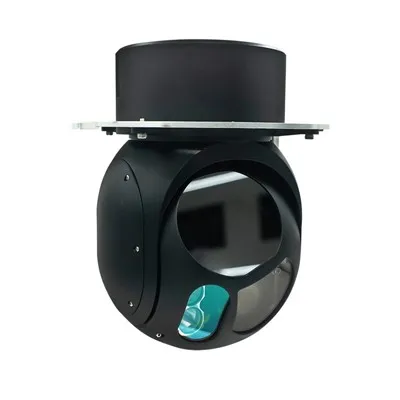
MWIR Thermal Imager 640 If you are interested in learning more about our SWIR camera lenses or have specific imaging requirements, we encourage you to contact us. Our team of experts will be happy to discuss your needs and help you find the right solution for your application. We look forward to the opportunity to work with you and contribute to the success of your projects.
References
- Smith, J. (2018). Introduction to Short-Wave Infrared Imaging. Wiley.
- Jones, A. (2020). Optical Design for Short-Wave Infrared Systems. SPIE Press.
- Brown, L. (2021). Applications of Short-Wave Infrared Cameras in Industrial Inspection. IEEE Transactions on Industrial Electronics.
Xi’an Zhongke Lead Ir-Tech Co., Ltd.
We are one of the most experienced swir camera lens manufacturers in China, specialized in providing high quality OEM products with the industrial grade. We warmly welcome you to wholesale high performance swir camera lens at an affordable price from our factory.
Address: Building 8,Hard Technology Enterprise Community No.3000,Biyuan 2nd Rd,High-Tech Zone Xi’an,Shaanxi,China
E-mail: sales@lead-ir.com
WebSite: https://www.leadinfrared.com/
